


Welcome to Seomra Ranga, the Hub for Primary School Resources. For the overseas visitors “Seomra Ranga” means “classroom” in the Irish language.
Seomra Ranga has been successfully providing tried and tested resources for primary school classrooms since 2007. Since that time, the site has gradually built up a strong following amongst educators as a repository of quality teacher-created resources. The resources on the site, which support all areas of the curriculum, are arranged in accordance with the curricular provisions of the Irish primary school….
Snuggle Mountain
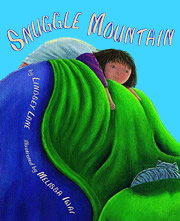 Snuggle Mountain is a beautiful story app in HD for iPad or iPhone/iPod for younger pupils. The story, written by Lindsey Lane, is centred around Emma, a little girl who must climb to the top of Snuggle Mountain to wake the two-headed Giant who is caught in a Sleeping Spell. She wants pancakes for breakfast and she must enter the cave at the top of the mountain to wake the Giant who has forgotten about breakfast. read more…
Draft School Self-Evaluation Guidelines
 The Inspectorate recently published “School Self-Evaluation: Draft Guidelines for Primary Schools“. The Guidelines are intended to support schools to engage in robust self-evaluation of teaching and learning. Its purpose is to allow schools to take the initiative in improving the quality of education provided to its pupils. The Guidelines also offer a framework for school self-evaluation that places the process in the context of school development planning and the school improvement plan. The Guidelines are intended to assist schools to: read more…
Facebook Milestone
WOW! Today marks the milestone of 2,000 “Likes” on the Seomra Ranga Facebook Page. I have to admit that I was initially reluctant to get involved with Facebook, but I was persuaded by Debbie in Logis Media to go with it. So, the Facebook page was set up in advance of the launch of the new website in November 2010. Its purpose was to compliment the website and establish the site in the world of Social Media. read more…
Cathal Can Sign
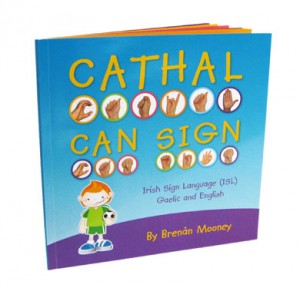
I just came across this book in a bookstore yesterday. Even though it’s been in print since 2010, I hadn’t heard of Cathal Can Sign before. Written by Brenán Mooney, it is a beautifully produced book with 60 glossy pages filled with colourful illustrations. The primary purpose of the book is to teach children Irish Sign Language (ISL). However, what is unique about this book it that it combines the teaching of ISL with both English and Gaeilge. The characters of “Cathal” and his family are used throughout the book both as decorative illustration and as a means to engage pupils to learn ISL. read more…
Station Teaching: Poland
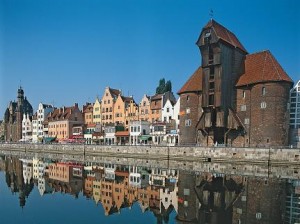
Dennis Collins explains how he used a “Station Teaching” methodology to teach his pupils about Poland, its physical features, cities, sport, history, religion:
I used the Resource 1 document for station teaching – each station is coded with a different colour for the text – when teaching the topic of Poland with sixth class. I used the Resource 2 document as an introductory worksheet to start the lesson with the class. This went really well as it is very relevant for the children at the moment with the Euro 2012 tournaments coming up, as well as the fact that there are many Polish people living in Ireland.
The Easter Rising
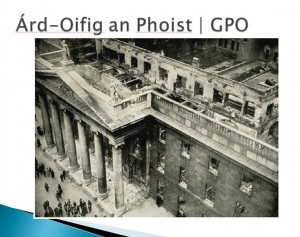
This Powerpoint resource on the 1916 Easter Rising summarises the background to the conflict, who was involved and the buildings that took centre stage during the conflict. It also focuses on a little known figure in the Rising, Elizabeth O’ Farrell. The accompanying handout/worksheet is for follow-up pair work – it gives more information about the figure of Elizabeth O’ Farrell and gives pupils questions for research to find out more about her.
New School Report Cards
 The issue of new school report cards seems to have slipped under the radar, however it is an issue that schools and teachers will have to address sooner rather than later. The Department of Education and Skills (DES) recently issued a circular entitled “Initial Steps in the Implementation of the National Literacy and Numeracy Strategy” (Circular 0056/2011). The circular informed schools that the Minister for Education was seeking the co-operation of schools in five key areas of the Strategy, one of which was a “better arrangement for reporting children’s progress”. It states that teachers are now required to report on children’s progress to their parents twice during each school year. One of these will more than likely be an official parent-teacher meeting, the other “must include a written report at the end of the school year presented in the format of one of the NCCA report templates”. read more…
Guest Post: Internet Safety
 I think we’ll all agree that times have changed. The Digital Age means that technology is now very much a part of our children’s lives, at home, in the classroom and socialising with their friends. But with so many issues to worry about, from cyber-bullying to social networks, the easy thing to do would be to not let them go online at all. However, we must remember that the Internet is a valuable learning tool for children of all ages as information has never been more accessible. As well as complementing their school work, children can learn exciting new things about the world around them and have access to interactive educational materials through websites, games and video content. Being technologically competent is also critical to their future employment prospects. In the same way we want to teach our children how to be safe in their day to day life, from road safety to stranger danger, the same principles apply in the virtual world. read more…