Lenten Resources 2011
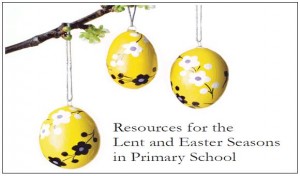
The religious season of Lent is about to begin next week, beginning with Ash Wednesday on March 9th. The Irish website Kandle has put together some resources to help the primary school teacher prepare the pupils during the season of Lent. For anyone not familiar with the Kandle website, it is the website of the Kildare and Leighlin Diocese which has been making religious classroom resources available to teachers for quite some time. These resources, especially those for Advent and Lent, are usually practical and are most suitable for use in the classroom.
Lenten Resources for 2011 are now available to download freely on the Kandle website. The 36 page Lenten pack contains resources for Ash Wednesday; a prayer service for Ash Wednesday; Wordsearches; Colouring Pages; Activities for each of the Sundays of Lent; Information on Feasts and Saints days that occur during Lent; Stories from the Bible; Mothers’ Day; Explanations and Activities for Holy Week; a Quiz; May the Month of Mary.
This Lenten Resource Pack is now available to download (.pdf file 3.93MB).
Interview With Sheila Nunan, INTO – Call for Questions
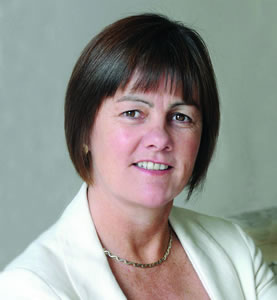
A new addition to the new website commenced in January when a series of monthly interviews kicked off with an interview with Áine Lawlor, Director of the Teaching Council. This was followed up with interviews with Education Spokespersons from some of the main Political Parties prior to the General Election. Seomra Ranga is now delighted to announce that Sheila Nunan, General Secretary of the INTO has accepted an invitation to be the next subject for our interview series.
Sheila Nunan is General Secretary of the Irish National Teachers’ Organisation (INTO), the first female to date in its 141-year history to lead the INTO. She has been a member of the Central Executive Committee (CEC) of the INTO since 1995 and was INTO President in 2005/2006. In 2006 Sheila was elected Deputy General Secretary/General Treasurer and served in that role until her election as General Secretary in 2009, securing more than 60% of the ballots cast by the membership. Sheila is a former primary school teacher and principal. She taught in Tallaght and in Bray. She is a graduate of University College, Dublin and St. Patrick’s College, Drumcondra.
This is where visitors to the website can become involved. Sheila has agreed to take questions from visitors to the website. You can submit questions for Sheila via the Facebook or Twitter pages, or by posting a comment on this post. These questions must not be of a specific nature but about points in general in relation to education in Ireland and the work of the INTO. Questions should also not be of a personal nature and should be succinct and to the point. I will collate / edit /amalgamate these and submit them to Sheila for answers / comments. I will then put Sheila’s answers together into a post on the Seomra Ranga website.
This is a great opportunity for practising teachers to put questions directly to the General Secretary of the INTO, so I hope that we can get a series of questions from a cross-section of the teaching community. I wish to express my appreciation to Sheila Nunan for agreeing to submit herself to questioning through the Seomra Ranga website. If there are other figures involved in education that you think would be a good interviewee, please let me know.
Census Charlie Resources
Census Background
The 2011 Census will take place on Sunday April 10th next, when every household in the country will complete their Census form. The census is a count of the population of the country. It also asks questions relating to every person in the country on Census night to collect information on a variety of important topics including age, education, language spoken, employment, health etc. The information provided is strictly confidential and only statistical reports are published. The Central Statistics Office (CSO) conducts a census of Ireland every 5 years. It employs a temporary field force of nearly 5,500 to carry out the census across the country, including almost 5,000 census enumerators who will deliver and collect census forms to every household.
A Census is conducted to give a comprehensive picture of the social and living conditions of our people in 2011. Only a Census can provide such detail. The results are essential tools for effective policy, planning and decision-making. An accurate census is in everyone’s interests. It provides the knowledge so that public resources can be shared evenly across the country and to ensure that services at local level are relevant to all the people who live there. Census figures are important to each and every community in Ireland because they provide information about the population down to the local level across a range of different criteria e.g. age, education, employment, language spoken, health, etc. This information can be used to tell at a community, regional and national level about the composition of the population and to identify the needs and requirements of each group in planning for the provision of services. And the beauty of the census information is that everyone can use it – it’s free, it’s easy to access and it’s extremely useful.
Census History
Ireland has been conducting Censuses of Population since 1821. This enables us to track developments over a long period of time with considerable accuracy. The census is therefore a fundamental part of our national heritage and our collective knowledge about the Irish people. Unfortunately, most of the census returns prior to 1901 have been lost, either deliberately destroyed (1861 and 1871 returns), pulped because of paper shortages during World War 1 (1881 and 1891 returns) or destroyed when the Customs House was burned in 1922 (1821, 1831, 1841 and 1851 returns). Of the pre-Independence Censuses, only the 1901 and 1911 Census returns remain intact today. The publication of these records online at the National Archives has provided millions of Irish people and their descendants all over the world with the opportunity to discover their ancestors. This has been an extremely popular facility, with millions of visitors to the site since the 1901 records were first published in 2008.
Census Resources for Primary Schools
A set of topic-based lessons featuring Census Charlie has been developed to help primary school children understand what the census is about and to learn how and why a census is conducted. These have been developed and piloted by primary teachers for use in classes from first to sixth class. The aim of these lessons is to enable children to understand the census process and to teach skills in the collection, representation and interpretation of data. Census Charlie has lots of activities to make the learning fun. There are four lessons for each class grouping: 1st/2nd, 3rd/4th, 5th/6th. Each lesson has been developed specifically to incorporate the principles of the Primary School Curriculum and content objectives for each lesson are provided. The lessons have obvious connections to the English curriculum (Language development), Maths (Number and Data strands), SPHE (Myself and the Wider World Strand), SESE History (Continuity and Change Over Time strand – comparing past censuses), SESE Geography (Human Environments strand).
Census Lesson Packs include:
• Comprehensive teacher notes and lesson plans
• Census information and key messages
• The Census Story
• Census flashcard/fact cards
• Sample Classroom Census forms
• Graph templates and tally sheets
• ICT tasks
• Integration and linkage ideas
• Assessment tasks
• Home/school links
• Extension activities
All of these classroom resources can be downloaded from the Census Website Schools’ Resources page.
St. Patrick’s Day Scoilnet Themepage
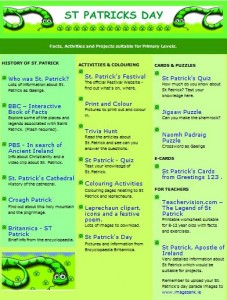
For those who may not be aware, Scoilnet has put together forty-four different Themepages covering a broad range of themes across all areas of the curriculum including World War II, Weather, Safety, Water, Shapes All Around Us, Roald Dahl and many others.
They also have a dedicated Themepage for St. Patrick’s Day which teachers should visit at this time of the year. It has seasonal ideas for projects and activities for the classroom on the theme of St. Patrick, his life and his legacy. It provides links to other sites with information on the life of St. Patrick, activities, colouring pages, quizzes, cards and puzzles.
Archaeology in the Classroom
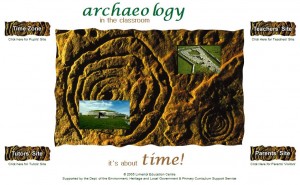
It’s About Time – Archaeology in the Classroom, is an SESE History resource site for teachers. It was developed in 2005 by Limerick Education Centre and supported by the Department of the Environment, Heritage and Local Government and the Primary Curriculum Support Service PCSP (now amalgamated into the PPDS). In the primary schools’ section, the site has different areas for pupils, parents and teachers.
The pack is divided into twelve modules and although the focus is on SESE History, there are strong links to Science and Geography. The pack is also designed to integrate across the whole curriculum. Each of the twelve modules can be downloaded individually by the teacher. The first three modules focus on the idea of “archaeology”; the next three focus on the Stone Age; the next three focus on old buildings and an appreciation of our built heritage; the final three modules focus on local studies. Each module emphasises pupil-centred learning, in which pupils actively engage in activities that enable them to become educated observers. This complements the curriculum’s objective to teach pupils the skills of ‘working as an historian’.
“Timezone” is the name of the pupils’ section of the site. It contains facts on archaeology, links to games with historical themes, links to other websites of historical interest, printable colouring pages, ideas to find out about your local area and information on the job of archaeologists.
A hard copy of this pack was delivered to all schools when this resource was first published. However, if this cannot be found, it is all free to download HERE
St. Patrick’s Door Sign 01
Seasonal sign for the classroom door. (.pdf file 570KB) Download File…
Better Literacy and Numeracy for Children and Young People
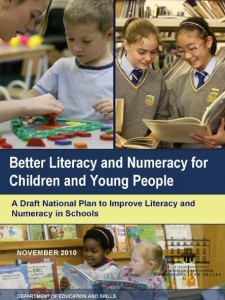
In November 2010, the Department of Education and Skills (DES) published “Better Literacy and Numeracy for Children and Young People – A Draft National Plan to Improve Literacy and Numeracy in Schools“. The Draft Plan stems from the concerns that standards in literacy and numeracy in our primary and post-primary schools were declining. While recognising that the Irish education system has traditionally been praised for its high standards, the draft plan says that “good is no longer good enough”. It further states that “We need to re-examine how well our educational system is preparing young people for the challenges that they will face as Irish, European and global citizens in the future. If we fail to raise literacy and numeracy levels …. we run the risk that our young people will not have sufficient literacy and numeracy skills to function effectively …”
The Draft Plan states that the literacy levels of Irish students in primary schools have not improved in over thirty years and that the teaching and learning of mathematics in Ireland requires even greater attention than literacy. While acknowledging that there are many different subjects to teach on the primary school curriculum, the draft plan boldly states that “we will have to give priority to the improvement of literacy and numeracy over other desirable, important but ultimately less vital issues”. The draft plan has set out targets that it wishes to see achieved, among which are:
-
to increase the percentage of primary children performing at Level 3 and Level 4 (the highest levels) in the National Assessments of Mathematics and English Reading by at least 5% at both second class and sixth class by 2020
-
to reduce the percentage of children performing at or below Level 1 (minimum) in the National Assessment of Mathematics and English Reading by at least 5% at both second and sixth class by 2020
-
to extend the National Assessment of Mathematics and English Reading to assess the performance of students at fourth class
The Draft Plan identifies the role that the Colleges of Education have to play, the role of Principal Teachers in leading change within schools, the importance of high quality pre-schools and the important role that parents and the community have to play in the promotion and development of literacy and numeracy. The plan also signals many changes that are in the pipeline in order to improve the standards of literact and numeracy in our schools:
-
the introduction of the Aistear programme to replace the present infant curriculum
-
increase the B.Ed. to a four-year degree programme, at least an aggregate of one year of which is school-based
-
make participation in the National Teacher Induction Programme for NQTs mandatory by 2012
-
teachers to do professional development courses in literacy, numeracy and assessment every five years
-
all summer courses to include units on the teaching of literacy and numeracy across the curriculum in order to get recognition
-
target the development of the teaching of literacy and numeracy in DEIS schools
-
introduce an early assessment system
-
implement intervention strategies in the second term of junior infants for pupils experiencing difficulties
-
issue guidance to schools to use all discretionary curriculum time for the teaching of literacy and numeracy
-
allocate a higher proportion of available funding and personnel to CPD on EAL and integration issues
-
the development of “schools like ours” data, wherby schools could have access to information about the achievemnt levels of students in “matching” schools to inform the judgements the school makes when evaluating their work and to set challenging targets for improvement
-
require schools to put in place a three year plan for the promotion and improvement of literacy and numeracy standards, in which specific targets are set and specific actions defined
The Draft Plan closes with the comment that, “Improving national standards in this way will require a relentless focus on literacy and numeracy in the educational system and beyond”.
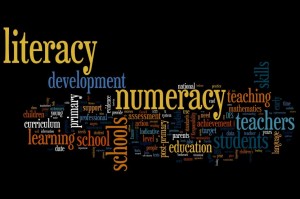
The above graphic, created using Wordle, shows the key words used in the Draft Plan. I copied the entire text of the plan into Wordle and it generates a word cloud of the most used words and phrases. The larger and bolder the word, the more frequently they are used in the text of the plan. This is useful to see what the key themes of the Draft Plan are. You can click on the graphic to see a larger version.
Teachers should really make time to sit down and read this Draft Plan as it will impact greatly on the teaching and learning process in the future. Submissions and comments on the plan were being sought but the closing date has now passed. However, as you can see from my brief summary, many changes are afoot and the future certainly seems to herald a huge emphasis on the promotion and development of literacy and numeracy. What do you think? Please open up a discussion and leave a comment below.

Using Twitter in the Classroom
I started using Twitter in my classroom ( @mrquinnsclass )with my 1st and 2nd class during the final term of the last school year. I was encouraged to start because a number of schools throughout the country were coming together for a Twitter project. Organised by Simon Lewis ( @simonmlewis ) the project stimulated the pupils to learn about other schools in Ireland. During another part of the project, we had a Twitter conversation with all of the other schools in the project about the artist Jackson Pollock. This was really interesting and we followed this up by creating our own Jackson Pollock Pictures using a Jackson Pollock app on our iPod Touches. The pupils were quite engaged so after the project was completed, we continued to tweet every other day in class.
This year I have 2nd and 3rd class, half of whom I also taught last year and by this stage they are now quite conversant with the whole Twitter idea. We continued to tweet this year and regularly tweet about things we are learning in class and things we write about on our School Blog. Last week we were reading a chapter in our Geography books about the food we eat and how and where it is produced. Part of the chapter displayed three sayings about food and we wondered if we knew any more. We were having difficulty coming up with many more sayings, so we came up with the idea of asking our followers on Twitter (of which there are now more than 100) if they could help us with some food sayings. So we came up with a Twitter hashtag #foodsayings and put the call out to our Twitter followers. The # symbol, called a hashtag, is used to mark keywords or topics in a Tweet. It was created organically by Twitter users as a way to categorize messages. By clicking on the hashtag link, followers can view all tweets with that hashtag, thereby gathering together Tweets with a similar theme.
Our call for help to our Twitter followers was a great success and almost instantly brought the outside world into our classroom. Teachers and classes contributed food sayings to us via Twitter, even a school in Indiana, USA, with whom we are in regular Twitter contact, contributed to the discussion. At last count we had gathered 50-60 food sayings. This led to great discussion about what each of the food sayings meant. Oral language was developed and the idea that these and similar sayings were not to be taken literally was explored. We discussed situations when these food sayings could be used. Throughout the day, pupils were trying to integrate a food saying into the classroom conversation. It was amazing how something that wasn’t planned developed into a great learning experience, and all through the medium of technology.
The pupils were delighted when they recognised some teachers on Twitter whom they had met in person at the CESI Conference where they were demonstrating their use of the iPod Touch in the classroom. You can see some of the results here of our Twitter Food Sayings . Some of the older tweets seem to have already disappeared but some are still there. I would encourage more teachers to try out Twitter in the classroom and see how it can be integrated into the curriculum in a fun and interesting way.
Seachtain na Gaeilge 2011
Tá Seachtain na Gaeilge 2011 beagnach linn agus tá súil agam go bhfuil múinteoirí bunscoile ag déanamh pleanáil chun imeachtaí Ghaeilge a eagrú sa seomra ranga i rith na seachtaine. Má tá leideanna ag taisteáil uait chun an Ghaeilge a spreagadh sa seomra ranga, gabhaim buíochas do suíomh Seachtain na Gaeilge chun cead a thabhairt dom don acmhainn Lámhleabhar na mBunscoileanna 2011 a chur ar fáil le híoslódáil ón suíomh seo. Sa lámhleabhar gheobhaidh tú moltaí le haghaidh dlúthdhioscaí, eolas faoi chomórtaisí, tráth na gcesiteanna, moltaí d’imeachtaí a eagrú i rith na seachtaine, crosfhocal agus cuardach focal.
Má tá imeachtaí eile á eagrú i do scoil fhéin, déan trácht thíos agus inis dúinn go léir cad atá i ndán do na páistí i do scoil le haghaidh Seachtain na Gaeilge.
National Frog Survey of Ireland
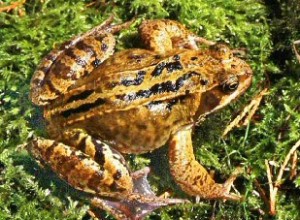
The National Frog Survey of Ireland began in March 2010 and will run until November 2011. As well as producing an up to date map of frog distribution in Ireland, the survey will also examine the aquatic and terrestrial habitats used by frogs and gather information on the threats facing these habitats. Baseline data on the size of the national frog population will also be gathered against which future population changes can be compared. The survey is funded by the Department of the Environment, Heritage and Local Government and will be carried out by National Parks and Wildlife Service Conservation Rangers in partnership with Giorria Environmental Services, Quercus at Queen’s University Belfast and the charity Amphibian and Reptile Conservation.
The results of the survey will help fulfil obligations under the EU Habitats Directive and, ultimately, will help to ensure the long-term survival of frogs in Ireland. For the survey, records of frogs and frog spawn are now being sought from the public. If you have frogs in your garden pond, or in your school pond or know where frogs breed near you, you are asked to record your findings in an Online Survey.