


Welcome to Seomra Ranga, the Hub for Primary School Resources. For the overseas visitors “Seomra Ranga” means “classroom” in the Irish language.
Seomra Ranga has been successfully providing tried and tested resources for primary school classrooms since 2007. Since that time, the site has gradually built up a strong following amongst educators as a repository of quality teacher-created resources. The resources on the site, which support all areas of the curriculum, are arranged in accordance with the curricular provisions of the Irish primary school….

O’Brien Press Resources
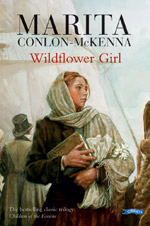
Seomra Ranga is pleased to announce a new association with O’ Brien Press on the new website. O’ Brien Press has made all of their resources for class novels available for download via the new Seomra Ranga website. Teaching Guides and Teaching Ideas downloads are available for the full O’Brien Press catalogue of novels for primary schools. Resources are available for fiction and fact books, books for infants and senior pupils, books in both English and Gaeilge. The downloads are full of ideas to help the teacher use the books as a cross-curricular resource in the classroom. Examples of available resources include the following books:
-
Wildflower Girl
-
All About Hurling
-
Strongbow
-
The Moon King
-
Faraway Home
-
Dream Invader
-
Trouble for Tuffy
-
Mad Grandad’s Flying Saucer
-
Ed’s Funny Feet
-
Sailí na Spotaí
-
Fiacla Mhamó
-
Moncaí Dána
-
Bróga Thomáis
These resources may be accessed in the following ways:
-
Curriculum >> English >> Class Novel (resources for English Novels)
-
Curriculum >> Gaeilge >> Úrscéal Ranga (acmhainní do leabhair Ghaeilge)
I would like to express my thanks to Ivan at O’Brien Press for permission to make these resources available to visitors to the new Seomra Ranga website.
Samhain 2010
As a new addition to the new website, Seomra Ranga will produce a monthly A4 calendar for the teacher. The one page calendar will be suitable for sticking to the teacher’s desk, to the classroom wall or to the staffroom noticeboard. A new calendar poster will be placed on the site each month. This poster is…
Trans-Atlantic Twitter Conversation

I started using Twitter in my classroom with my 1st and 2nd class during the final term of the last school year. I was encouraged to start because a number of schools throughout the country were coming together for a Twitter project. Organised by Simon Lewis (@simonmlewis) the project stimulated the pupils to learn about other schools in Ireland. During another part of the project, we had a Twitter conversation with all of the other schools in the project about the artist Jackson Pollock. This was really interesting and we followed this up by creating our own Jackson Pollock Pictures using a Jackson Pollock app on our iPod Touches. The pupils were quite engaged so after the project was completed, we continued to tweet every other day in class.
This year I have 2nd and 3rd class, half of whom I also taught last year and they were quite conversant with the whole Twitter idea. We continued to tweet this year and regularly tweet about things we are learning in class and things we write about on our School Blog. This week, we have joined other schools who have been tweeting about things we were learning during Science Week. It was while we were looking at our tweets this week that we received a message that read: “Hi there! We are tweeting from our classroom too! Would you share with us what you’re learning today? Where are you?” We replied to this tweet and so began a conversation during the course of the week with a school in Indiana, USA. (@superkiddos) This is what one of our lecturers in college called “opportunity teaching”. Without any pre-planning, we started learning about children who just happened to be the same age as my pupils. It was also interesting for my pupils to learn that the pupils in Indiana were just starting their school day as we were finishing up our school day. Another school in Indiana has also begun to join in the conversation with us (@BloggingBees). Here is how the conversation has gone over the course of a few days this week:
- USA: Hi there! We are tweeting from our classroom too! Would you share with us what you’re learning today? Where are you?
- IRE: We are learning things on our iPod Touches. We are in Sligo, Ireland. Where are you? What ages are you?
- USA: We live in Indiana, United States. We r 7 & 8 yrs. old. We live by a lot of lakes. 20/24 of us have a lake in our backyards.
- USA: Some things we’re curious about: Do u have school uniforms? Do u have big cities? How do u get around your town? Cars? Bikes?
- IRE: We are learning about Christopher Columbus in history. Do you know anything about him? What is your weather like? It is cold.
- IRE: We are 7, 8 and 9 years old. Our school is beside Knocknarea Mountain and near a surfing beach called Strandhill.
- IRE: We wear a school tracksuit to school. It is navy with white stripes. We use cars because we live 5 miles from town. Its rainy!!
- IRE: We start school at 9.20am. What time do you go to school at? We finish at 3pm. What time do you finish at?
- USA: We start school at 8:20 and end 3:00 pm. We are just starting our day — are you ending your day?
- USA: Normally it is snowy & cold in November, but today it is unusually warm. Last week it snowed and this week it’s hot!
- USA: CC facts we think we know: Sailed across the seas in 1492 Discovered America 10/12 is Columbus Day Do u have Columbus Day?
- IRE: We’ve just got another half an hour to go. We’re just finishing our Irish language lesson at the moment. Theres 27 in our class
- IRE: Columbus died when he was 55 years old. We found out that his 3 ships were called Santa Maria, Pinta and Nina. We’ve no CC day.
- USA: We have about 5 more hours to go. We’re getting ready for writing workshop.
- USA: We are looking at a globe and light & figuring out why you are getting ready to go home & we are just starting our day.
- USA: what lang. do u speak & know? We speak English.
- USA: We know a little Spanish, Arabic, Korean, and sign language. (Our teacher if fluent in ASL.)
- IRE: We’re going home now. We speak English and we’re learning to speak Irish. Goodbye. Tweet you tomorrow!
- IRE: Our school website is http://ransborons.scoilnet.ie/blog/ Do you have a website so that we could learn more about you?
- USA: Our corporation site is www.wawasee.k12.in.us
- IRE: We wrote about helicopters http://bit.ly/cDRl7q We received an email from a Helicopter Training Academy in Australia because of it. #twience
- USA: That is so cool! Can you teach us something about helicopters? Most people here don’t get to ride in helicopters.
- USA: Helicopters are usually for emergencies or news media in America. The public ride in airplanes.
- USA: We love learning about you on your website! So cool!
- IRE: We found out on our iPods that Christopher Columbus introduced pineapples to Europe!
- USA: Cool! We have someone in our class who LOVE pineapples! What kinds of fruit do you eat most in Ireland?
- IRE: We can get almost any kind of fruit but our favourites are apples, pears, grapes and Irish grown strawberries
- IRE: Do you get homework for the weekend? We don’t get any for the weekend but we do during the week.
- USA: We don’t get homework, but our class is the exception. We are expected to read and practice spelling every night, though.
- USA: Those are some of our faves too! We also love bananas. What kind of sweet things do you like? We like cookes and chocolate!
- USA: We read your school’s site. Can you tell us: What is hurling? Our most popular sports are football, baseball, and basketball.
- USA: We spell it “favorites.” We are wondering: is “favourites” a mistake or is that how you spell it?
- USA: Do you spell other words differently too?
- USA: Do you have special dances you do in Ireland? Some people here do a dance called a Tango.
- USA: We do a school dance too!
- IRE: We like chocolate bars, cake, jellies, sweets (candy) crisps (chips) biscuits, marshmallows, ice-cream, lollipops and popcorn.
- IRE: Hurling is an Irish sport. The stick is made from Ash and the ball is called a sliotar. Over the bar = 1 pt. Under the bar=3pts
- IRE: We spell favoUrite with a U. We also spell coloUr with a U. We also spell flavoUr with a U.
- IRE: Maeve in third class does Irish dancing. One of her dances is called “The Job of Journey Work”. It’s a traditional set dance.
- USA: What r your biscuits like? For lunch today we’re having chicken soup, turkey sandwich, cookie. What did u have for lunch?
And so we ran out of time on Friday afternoon. We hope to continue the conversation via Twitter and see what else we can learn about life for pupils of the same age 3,000 miles away!
Google Docs and the iPod Touch

I’m a relative novice to Google Docs and never really personally saw the need for me to find out what they could do and how to use them. I had been aware from many articles on the internet written by people in the field of education that they were widely used. However, it was only when I received my class set of iPod Touches in May 2010 that I began to think about how Google Docs could be incorporated into the use of the iPod Touch in the classroom.
I’ve received my class set of iPods on loan through a pilot project organised by Sligo Education Centre and Apple Ireland. Four classes in the country are piloting the use of this handheld technology in the classroom and they are located in Kilkenny and Wexford and are supported by their local Education Centre.
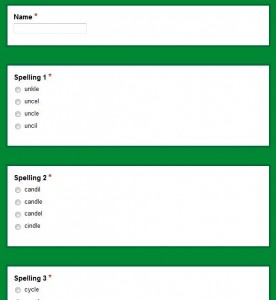 One area that I thought that Google Docs could be useful was in the area of spelling and tables so I started to learn how Google Docs could be used with the iPod Touch in the classroom. To use Google Docs, you have to set up a Google account if you don’t already have one. When registered, you then just go into Google Docs and select “Create New >> Form”. You then just set up a form any way you wish. There are different ways of seeking responses from pupils. You can have a text box answer, a paragraph answer box, a scale 1-5 answer box etc. For our Spelling Test, I set up a form where there were four possible answers for each spelling that we had been learning during the week. There was a radio button beside each spelling and the pupils had to select the radio button beside the correct answer for each spelling. There was also a text box for pupils to fill in their names. There was also a paragraph answer box for the pupils to type in their dictation sentences. All questions were marked with an * to show that they were mandatory fields and had to be completed. If a pupil forgets to fill in a field they will not be able to submit a form. Google Docs also creates a spreadsheet associated with the form that has been created. The spreadsheet gathers the information from the answers selected by the pupils.
When creating the form in Google Docs, an address for the location of the form is also generated. Because Google Docs is created online, pupils need to have online access. We have an Apple Airport router in the classroom which connects to the school broadband. The iPods have been set up to connect to the internet through this router.
So I placed the URL of the Google Form on the School Blog, to which the pupils have already set up a shortcut on one of the homescreens of the iPod. They open up the blog, click on the link to the Google Form, select what they think are the correct answers and fill in their dictations. When they have completed all sections of the form, they click “Submit” at the bottom. In the meantime, I have already opened up the associated spreadsheet on the whiteboard and the pupils are always amazed when their answers appear instantaneously on the screen. Each pupil’s answers appear on a single line of the spreadsheet. The teacher can also look down a column to see the class response to each spelling – it can be easily spotted if the class as a whole has had a problem learning a particular spelling.
I have done similar exercises with maths tables and litriú Ghaeilge. I have done this exercise with 1st Class, 2nd Class and 3rd Class and the response has been widely positive. Once the pupils got used to the idea, they found it quite easy to complete. As with all classroom work, some were finished quicker than others. This has been my first tentative steps into using Google Docs with iPod Touches in the classroom. I’m sure that there are boundless possibilities as to how something similar can be used for assessment tools and pupil responses in other areas of the curriculum.
Let’s Go Shoolie-Shoo
Let’s Go Shoolie-Shoo – Musical Starting Points for Age 5+ Dance Helen Mc Gregor and Bobbie Gargrave A & C Black, London, 2003 ISBN 0-7136-6615-3…
Three Rapping Rats
Three Rapping Rats – Making Music with Traditional Stories Kaye Umansky A & C Black, London, 1998 ISBN 0-7136-7315-X…
Three Singing Pigs
Three Singing Pigs – Making Music with Traditional Stories Kaye Umansky A & C Black, London…
Beginning Drama 4 – 11
Beginning Drama 4 – 11 Joe Winston and Miles Tandy David Fulton Publishers, Oxon, 1998 ISBN 1-85346-702-2…