


Welcome to Seomra Ranga, the Hub for Primary School Resources. For the overseas visitors “Seomra Ranga” means “classroom” in the Irish language.
Seomra Ranga has been successfully providing tried and tested resources for primary school classrooms since 2007. Since that time, the site has gradually built up a strong following amongst educators as a repository of quality teacher-created resources. The resources on the site, which support all areas of the curriculum, are arranged in accordance with the curricular provisions of the Irish primary school….
Peg OK / Not OK 01
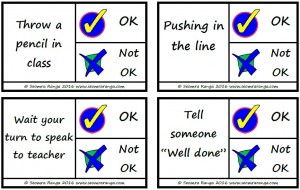 This resource is aimed at pupils with poor social skills who need practice in knowing the difference between what is OK and Not OK to do in different situations. This resource aims to develop categorisation skills as well as to encourage oral language and discussion on the topic.
Laminate all of the pages in the resource and cut up into 12 separate cards.
Say It, Think It 04
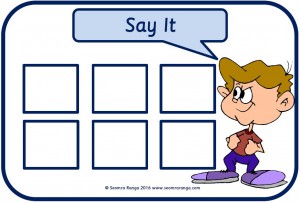 This resource is aimed at pupils with poor social skills who need practice in knowing the difference between thinking something and saying it aloud.. This resource aims to develop categorisation skills as well as to encourage oral language and discussion on the topic.
Pages 1-4 should be laminated. The small squares on pages 3-4 should then be cut out. Velcro should be attached to the squares on pages 1-2 and at the back of all cut out squares from pages 3-4.
Long Ago & Today Sorting 02
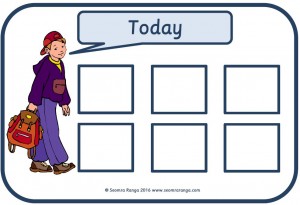 This resource is aimed at pupils in junior classes or pupils with speech and language difficulties. Categorisation is an important skill for younger/SEN pupils to develop. This resource aims to develop categorisation skills as well as to encourage and develop oral language and discussion on the differences between long ago and today.
Pages 1-4 should be laminated. The small images on pages 3-4 should then be cut out. Velcro should be attached to the squares on pages 1-2 and at the back of all cut out squares from pages 3-4. With a teacher/SNA working with a pupil, pages 1-2 are placed on the table.
Making Bingo
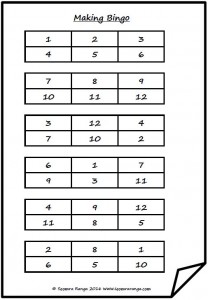 Creating educational Bingo games is a great way of supporting and reinforcing lessons in all areas across the curriculum. Pupils can learn and reinforce concepts in a fun way, not realising that they are learning incidentally.
This download is aimed at assisting teachers in creating their own Bingo games. It provides a formula for creating a Bingo game for six pupils. The teacher should select twelve images/words/sums etc,
Long Ago & Today Sorting 01
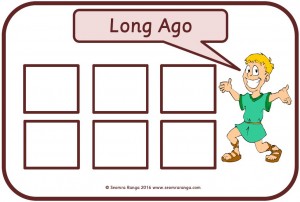 This resource is aimed at pupils in junior classes or pupils with speech and language difficulties. Categorisation is an important skill for younger/SEN pupils to develop. This resource aims to develop categorisation skills as well as to encourage and develop oral language and discussion on the differences between long ago and today.
Pages 1-4 should be laminated. The small images on pages 3-4 should then be cut out. Velcro should be attached to the squares on pages 1-2 and at the back of all cut out squares from pages 3-4. With a teacher/SNA working with a pupil, pages 1-2 are placed on the table.
Project 252 Update
 At the start of the calendar year I wrote a post about a year long project called Project 252. The idea behind the project, organised by Enda Donlon, project was to crowd-source a list of Ed-tech tools in order to compile an A-Z directory. So, throughout this year 2015, there has been a focus every fortnight on collecting teacher-recommended apps, websites and Ed-tech tools beginning with a different letter each fortnight. read more…
Big and Small Sorting 01
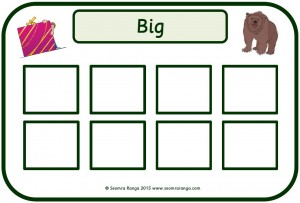 This resource is aimed at pupils in junior classes or pupils with speech and language difficulties. Categorisation is an important skill for younger/SEN pupils to develop. This resource aims to develop categorisation skills as well as to encourage oral language. This sorting activity focuses on the concept of the difference between big and small.
Pages 1-4 should be laminated. The small images on pages 3-4 should then be cut out. Velcro should be attached to the squares on pages 1-2
Say It Think It 03
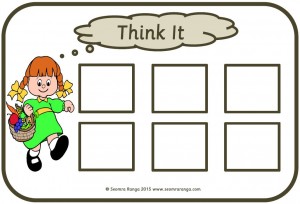 This resource is aimed at pupils with poor social skills who need practice in knowing the difference between thinking something and saying it aloud.. This resource aims to develop categorisation skills as well as to encourage oral language and discussion on the topic.
Pages 1-4 should be laminated. The small squares on pages 3-4 should then be cut out. Velcro should be attached to the squares on pages 1-2 and at the back of all cut out squares from pages 3-4. With a teacher/SNA working with a pupil