

Guest Post: Setting Up A School Library
There are a number of things to be considered when establishing a school library.
Function: Is the library just for lending or do you see it as a place for study and research? Are you considering teaching in the area? Are you incorporating the idea of the library as a maker space?
Location: Ideally, it should be in a central location that is accessible to all students and staff. Classroom libraries are OK if there is no other facility available but ideally try to earmark a space for the school library. read more…
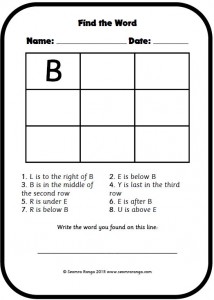
Find the Word 02
This literacy resource focuses on positional language which can pose some difficulties for younger pupils and SEN pupils. This pack includes five worksheets based on fruit for pupils to practise these essential skills. The worksheets include language like first, last, after, under, above, to the right of, to the left of.
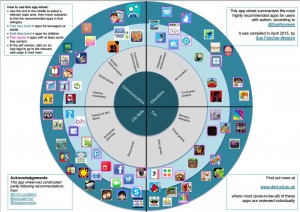
Apps for Pupils With Autism
Sue Fletcher-Watson is a developmental psychologist, working at the University of Edinburgh. She has a special interest in developmental disabilities, and autism in particular. Research and projects that she is involved with are featured on the DART (Development Autism Research Technology) website. The website also contains app reviews, which is how I came across the site some time ago. read more…

Guest Post: Teachers Are Leading Learning (Tomás Ó Ruairc, Teaching Council)
In his recent column on the ways in which teaching can change people’s lives, David McWilliams describes the wonderful impact that teachers have in leading learning – “It is a beautiful thing to see the weight of incomprehension being replaced by the freedom of understanding.” He notes his concern in relation to recent commentary that morale in the profession is low. I am delighted to reassure him that his positive experience in Newpark Comprehensive School is not an isolated one. read more…

Tech Week 2015
Tech Week is back! The 2nd national festival of technology aimed at students, parents, and the public, takes place this year from 26th April – 2nd May 2015 and again coincides with Digital Art Week this year. Tech Week is supported by the Science Foundation Ireland (SFI) Discover programme and tech industry sponsors including Salesforce, Google, Lero and Púca. read more…
iPad Tokens
These are tokens with an iPad motif to be used in conjunction with
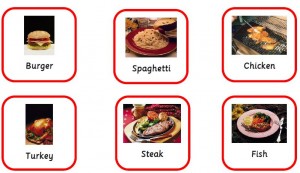
Hot/Cold Food Sorting
This resource is aimed at pupils in junior classes or pupils with speech and language difficulties. Categorisation is an important skill for younger/SEN pupils to develop. This resource aims to develop categorisation skills as well as to encourage oral language. This sorting activity focuses on hot and cold food. It would also be suitable for a class working on a restaurant Aistear theme.
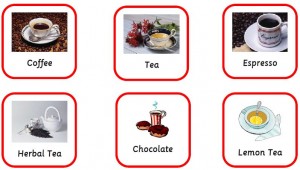
Hot/Cold Drinks Sorting
This resource is aimed at pupils in junior classes or pupils with speech and language difficulties. Categorisation is an important skill for younger/SEN pupils to develop. This resource aims to develop categorisation skills as well as to encourage oral language. This sorting activity focuses on hot and cold drinks. It would also be suitable for a class working on a restaurant Aistear theme.

Digital Art Week 2015
April 26th to May 2nd sees the arrival of our 5th annual Digital Art Week. This gives primary school children around Ireland the opportunity to share their digital art with other children around the country and complete some fun visual arts activities. As it’s digital, over the course of the week, schools are encouraged to use digital tools, such as Twitter, in order to learn about art and to create their own pieces of work. Appropriately, Digital Art Week also coincides with Tech Week. read more…
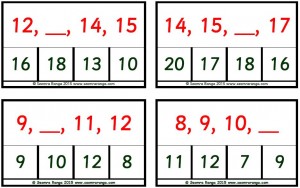
Peg The Missing Number 01
This resource is aimed at junior pupils or SEN pupils. It is based on number sequences. The pack contains 20 cards – at the top of each card is a sequence of numbers with one number missing. The pupil has to use a clothes peg to identify which of the four numbers at the bottom of the card is the missing number from the sequence. All of the sequences involve numbers up to 20.