

Welcome to Seomra Ranga, the Hub for Primary School Resources. For the overseas visitors “Seomra Ranga” means “classroom” in the Irish language.
Seomra Ranga has been successfully providing tried and tested resources for primary school classrooms since 2007. Since that time, the site has gradually built up a strong following amongst educators as a repository of quality teacher-created resources. The resources on the site, which support all areas of the curriculum, are arranged in accordance with the curricular provisions of the Irish primary school….
Hot/Cold Drinks Sorting
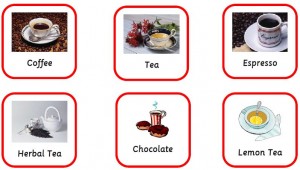 This resource is aimed at pupils in junior classes or pupils with speech and language difficulties. Categorisation is an important skill for younger/SEN pupils to develop. This resource aims to develop categorisation skills as well as to encourage oral language. This sorting activity focuses on hot and cold drinks. It would also be suitable for a class working on a restaurant Aistear theme.
Digital Art Week 2015
 April 26th to May 2nd sees the arrival of our 5th annual Digital Art Week. This gives primary school children around Ireland the opportunity to share their digital art with other children around the country and complete some fun visual arts activities. As it’s digital, over the course of the week, schools are encouraged to use digital tools, such as Twitter, in order to learn about art and to create their own pieces of work. Appropriately, Digital Art Week also coincides with Tech Week. read more…
Peg The Missing Number 01
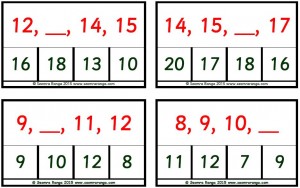 This resource is aimed at junior pupils or SEN pupils. It is based on number sequences. The pack contains 20 cards – at the top of each card is a sequence of numbers with one number missing. The pupil has to use a clothes peg to identify which of the four numbers at the bottom of the card is the missing number from the sequence. All of the sequences involve numbers up to 20.
Peg the Smallest Number 01
 This resource is aimed at junior pupils or SEN pupils. It is based on reinforcing the concept of number up to 20. The pack contains 24 cards – on the right hand side of each card are four numbers less than 20. The pupil has to use a clothes peg to identify the smallest of these four numbers.
Peg the Largest Number 01
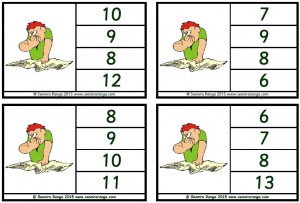 This resource is aimed at junior pupils or SEN pupils. It is based on reinforcing the concept of number up to 20. The pack contains 24 cards – on the right hand side of each card are four numbers less than 20. The pupil has to use a clothes peg to identify the largest of these four numbers.
Irish Symposium on Game Based Learning
 This year, iGBL will be hosted by Institute of Art, Design & Technology (IADT) in Dun Laoghaire on Thursday 4th June & Friday 5th June 2015. The iGBL2015 will present an energetic and compelling programme with a focus on new developments in games, game-based learning and serious games. The theme for iGBL2015 is “Boosting GBL through Creativity” with a focus on the creative influences that enrich the gamers’ experience. read more…
Book Review: Behind the Walls
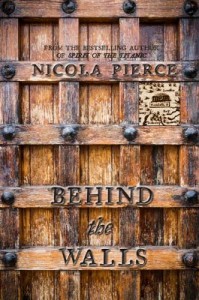 “Behind The Walls” by Nicola Pierce was set in Derry 1689, Northern Ireland, which even though this book is fiction, the setting was very realistic,especially for the situation that was set. It was very interesting, It made me sit down and think a lot more than I would have with a regular book. It made me consider my religion as I am a Catholic. I also thought about what I would have done under those circumstances. read more…
Same & Different Sorting 01
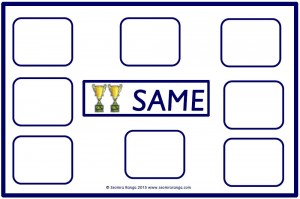 This resource is aimed at pupils in junior classes or pupils with speech and language difficulties. Categorisation/sorting is an important skill for younger/SEN pupils to develop. This resource aims to develop categorisation skills as well as to encourage oral language. This sorting activity focuses on the concept of same/different. There are two images on each sorting card – some images are the same, some are different.