

Welcome to Seomra Ranga, the Hub for Primary School Resources. For the overseas visitors “Seomra Ranga” means “classroom” in the Irish language.

Seomra Ranga has been successfully providing tried and tested resources for primary school classrooms since 2007. Since that time, the site has gradually built up a strong following amongst educators as a repository of quality teacher-created resources. The resources on the site, which support all areas of the curriculum, are arranged in accordance with the curricular provisions of the Irish primary school….

Please have a browse through the new site and support our work in developing new resources by becoming a Member. Individual and School Memberships are available.


Exploring Sligo

Exploring Sligo

‘Exploring Sligo, a Study of Sligo’s Heritage’ is a schools heritage and ICT project, which seeks to promote high levels of awareness and understanding of local heritage amongst participants. The project, initiated by Sligo Education Centre, originated as a result of consultations which took place between the centre and a number of teachers during which it became evident that local Sligo children were not aware of their local heritage and history. There then followed a discussion with a local archaeologist Joyce Enright, during which the possibility of doing some work with local schools was explored. The project ran in six County Sligo primary schools during 2010 and was co-ordinated by Joyce Enright and staff from the Sligo Education Centre. The project was supported by funding from the Centre and from the Heritage Council.

Each school involved had a workshop facilitated by Joyce, followed by visits to the local Heritage sites. Based on these visits the pupils documented their experiences in writing, photography, and art, and some in film and also collated stories about the sites. The website is designed using all the pupils own work based on their learning. It is hoped that it will be a resource to other local children, families and schools, but also that it will be a resource for any tourists who may wish to visit Sligo.

This website was only launched in the last two weeks and is a great example of how technology can be used to enhance pupils’ study and understanding of the curriculum, in this instance the SESE History curriculum. Rang V from my own school were involved and, although a huge amount of work went into the project both by the class teachers and by the pupils, there was a great sense of achievement when the final product was unveiled. The project also allowed the pupils to leave the confines of the classroom and explore at first hand the rich heritage that surrounds us in this beautiful part of the country. The pupils visited heritage sites such as Knocknarea Mountain, Culleenamore, Carrowmore Megalithic tombs, Parkes’ Castle, St. Attracta’s Well and Carrowkeel.

While this website could be seen to be solely of relevance to pupils in this area of the North-West, it could also be used as an invaluable resource for classes all around the country when doing a series of lessons on the comparative study of another area in the country. The website also shows the possibilities that can be achieved when marrying an area of the curriculum with technology. It provides a template for others to emulate, either on a larger or smaller scale. It also follows on the heels of other successful curriculum/technology projects in Sligo like the Seashore Project: “From Skerrydoo to Carrickfadda – A Study of Sligo’s Coastline” and the “Field Fences of County Sligo” project.

Exploring Sligo – A Study of Sligo’s Heritage

Interview with Ruairí Quinn, Labour Party

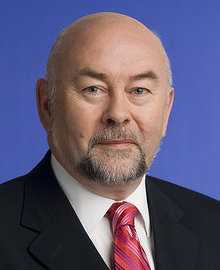
Ruairí Quinn

Ruairi Quinn is a Labour Party TD for the Dublin South East constituency. He represents Donnybrook, Sandymount, Ranelagh, Rathmines, Rathgar, Milltown, Terenure, Harold’s Cross, the south east Inner City, Ringsend, Irishtown and Ballsbridge. Ruairi has been a public representative for the area since 1973, and lives in Sandymount. He is a former Minister for Finance, Leader of the Labour Party, Chairman of the European Council of Finance Ministers (ECOFIN) and is currently Vice President and Treasurer of the Party of European Socialists.


Seomra Ranga: Will your party leave the Croke Park agreement intact or seek to abolish it?

Ruairí Quinn: The Labour Party supports the Croke Park Agreement. A Labour government will make the Croke Park agreement work, unlike the current government. We believe savings of €1.4 billion could be made annually if the agreement is fully implemented and real returns in productivity are delivered across the public sector. We believe public sector reform is the only way to ensure front line services in education can be protected.

Seomra Ranga: How will your party support the development of technology in primary schools, including meaningful access to quality broadband?

Ruairí Quinn: Labour believes we need a proper ICT Strategy for Education that will restructure the National Centre for Technology in Education, centralise control of all ICT purchases for schools using a single model and review the ICT hardware policy across the education system to ensure better value for money. We will also ensure existing broadband networks, owned by semi-state bodies, are accessible to our schools nationwide. This is the only way we can ensure all schools can have access to quality broadband.

 Seomra Ranga: Will your party reverse cuts in the pupil-teacher ratio?

Ruairí Quinn: The Labour Party in government will not disimprove the pupil-teacher ratio.

Seomra Ranga: Will your party guarantee that there will be no further cuts to the salaries of primary school teachers?

Ruairí Quinn: The future pay scales of teachers are dependent on whether the Croke Park Agreement is fully implemented.

Seomra Ranga: How does your party propose to assist young, qualified teachers in securing gainful employment in Irish primary schools?

Ruairí Quinn: We support measures which will ensure graduates from the teacher training colleges can get the practical experience they need to complete their probationary period. If elected to government, we will direct schools to prioritise unemployed teachers for substitution until it can be shown that there is a shortage of qualified unemployed teachers. We will also introduce rigorous measures to ensure no teachers are displaced and that opportunities for substitution and permanent teaching positions remain open to newly qualified teachers.

Seomra Ranga: Will your party finally bring to an end the wastage of public money on prefab accommodation in primary schools?

Ruairí Quinn: Labour will prioritise school building projects in our capital budget and we will not tolerate any further under-spend in the school building programme. In cases where schools spend hundreds of thousands of euro renting prefabs, Labour will enable schools to build permanent school accommodation instead.

Seomra Ranga: The Secretary of State for Education in the UK, Michael Gove, said recently of the General Teaching Council for England (GTCE), “I believe this organisation does little to raise teaching standards or professionalism. Instead it simply acts as a further layer of bureaucracy while taking money away from teachers”. What is your party’s position on the Irish Teaching Council?

Ruairí Quinn: The Labour Party believes all school children should be taught by professional teachers. We will review the role of the Teaching Council if elected to government.

Seomra Ranga: What is your party’s position on church control in Irish education?

Ruairí Quinn: The Labour Party believes the present situation, where 92% of our 3,200 primary schools are under Catholic patronage is a historical legacy which does not reflect the reality of modern Ireland. I am regularly contacted by parents from every part of Ireland, who cannot send their children to schools that reflect their beliefs and values. We believe this is a breach of the constitutional rights of parents to send their children to a school in accordance with their ethos and must be addressed. If elected to government, the Labour Party will establish a time-limited National Forum on Patronage in Primary Schools to ensure our education system provides a wider range of choice in ethos across Ireland. This will provide the road map to the future of our primary school system. At all times, our primary concern must be to ensure the maintenance of the continued quality of education for the children involved in our primary school system.

Seomra Ranga: What is your party’s position on the teaching of Irish? Should it remain compulsory?

Ruairí Quinn: Labour will maintain Irish as on the of the three compulsory Leaving Certificate subjects. However, we will undertake a thorough reform of the Irish curriculum in keeping with the aims of the 20 Year Strategy. Labour wants to create a virtuous circle where teachers and students are improving their spoken Irish on an ongoing basis. This can be done in part by reforming the curriculum so more emphasis is put on oral and aural skills. Our teachers will also need to be supported in this process.

Seomra Ranga: In government, will your party allow Learning Support Teachers provide appropriate support to pupils on the top end of the Special Educational Needs category (gifted) as indicated in the EPSEN Act?

Ruairí Quinn: Labour will review how supports for children with special educational needs are allocated as the current system does not work and far too many children are denied the supports they deserve. We are committed to reversing the cut to the number of psychologists in the National Educational Psychological Service in Budget 2011 at a cost of €3 million. Labour will support schools, parents and children with special educational needs by ensuring that necessary supports follow a child from primary to second level, and achieving greater integration of special needs related services.

Seomra Ranga: Will your party remove the embargo on the filling of middle management posts in primary schools?

Ruairí Quinn: Removal of the moratorium on middle management posts will be dependent on full implementation of the Croke Park Agreement.

Seomra Ranga: Does your party support the current proposals to pension changes for new entrants into the profession?

Ruairí Quinn: We believe the changes to pensions for new entrants to teaching will have to be reviewed as part of the full implementation of the Croke Park Agreement.

Seomra Ranga: How does your party plan to support the 90% of deaf children in mainstream education in Ireland?

Ruairí Quinn: We have no precise proposals to deal with this issue at present. We will have discussions with the relvant stakeholders to see how we can address the needs of blind children in a mainstream setting.

Seomra Ranga: What is your party’s vision for primary education in Ireland in the 21st century?

Labour’s ambition is to build not just a knowledge economy, but a knowledge society. Education is at the heart of a more cohesive, more equal and more successful society, and it will be the engine of sustainable economic growth. Labour is committed to protecting children’s education, because we believe they deserve the best start their country can give them. Even in this crisis, we can make progress. Labour will put improving educational outcomes, from literacy to third level, at the heart of our education reforms.

Interview with Paul Gogarty, Green Party

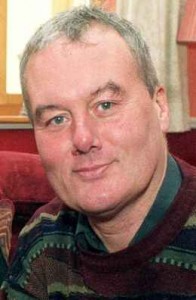
Paul Gogarty

Paul Gogarty TD first joined the Green Party in 1989. He was elected to South Dublin County Council in 1999.  He was first elected to Dáil Eireann in May 2002 and returned in May 2007. He represents the constituency of Dublin Mid West which includes the large population areas of Clondalkin and Lucan as well as towns and villages such as Brittas, Newcastle, Palmerstown, Rathcoole and Saggart. Paul is the Green Party’s Spokesperson on Dublin. He is Chair of the Education and Science Committee in the Oireachtas.

Seomra Ranga: Will your party leave the Croke Park agreement intact or seek to abolish it?

Paul Gogarty: We will leave it intact as if it works it will make savings. However if all unions involved in teaching and other areas do not sign up it could risk the agreement being dismantled and further pay cuts being back on the table.

Seomra Ranga: How will your party support the development of technology in primary schools, including meaningful access to quality broadband?

Paul Gogarty: The Green Party in Government had already begun a programme to introduce broadband to all second level schools. It is planned to extend this to primary schools. All the money for this came from the Department of Communications, where we had a Minister, not Education. There is huge potential to make savings in IT through the usage of cloud computing where the data and software to operate programs is all stored remotely. It cuts down on maintenance at school level and wiring and allows for cheaper interfaces than laptops to be used, meaning more children can have more access to computing for a reduced costs.

Seomra Ranga: Will your party reverse cuts in the pupil-teacher ratio?

Paul Gogarty: In the 2009 Programme for Government, we succeeded in doing this at a time when budgets were being cut and will work to further reverse and improve the ratio in primary schools.

Seomra Ranga: Will your party guarantee that there will be no further cuts to the salaries of primary school teachers?

Paul Gogarty: There can be no guarantees in the current economic situation, but we want to protect education funding in comparison with other departments.

Seomra Ranga: How does your party propose to assist young, qualified teachers in securing gainful employment in Irish primary schools?

Paul Gogarty: We would reintroduce supply panels on a regional basis with the stipulation that only available teachers be added onto the panel and that schools can only pick from this panel. This would provide opportunities for out of work teachers as well as new graduates. We acknowledge that retired teachers have much experience to offer but as they are getting pensions and graduates would have no income, it makes sense to build up experience levels in young teachers rather than use retired teachers.

Seomra Ranga: Will your party finally bring to an end the wastage of public money on prefab accommodation in primary schools?

Paul Gogarty: We will work to do this, but prefabs will never be totally eradicated as accommodation still needs to be provided while new builds are taking place.

Seomra Ranga: The Secretary of State for Education in the UK, Michael Gove, said recently of the General Teaching Council for England (GTCE), “I believe this organisation does little to raise teaching standards or professionalism. Instead it simply acts as a further layer of bureaucracy while taking money away from teachers”. What is your party’s position on the Irish Teaching Council?

Paul Gogarty: We would review all bodies, including the Teaching Council, to see whether the levels of service could be provided from within a revitalised Department of Education, which would have accessible offices in all regional centres rather than the current relocated and hard to contact Dept of Education offices in the midlands.

Seomra Ranga: What is your party’s position on church control in Irish education?

Paul Gogarty: We recognise the huge contribution made by the religious in Irish education and there would not be an education system without them. But in today’s more diverse society religion in schools needs to be re-examined. We are for choice in education but also are inclined to argue that while such choice does not exist, religious instruction should not take place in any school during school hours, including those with a Catholic ethos.

Seomra Ranga: What is your party’s position on the teaching of Irish? Should it remain compulsory?

Paul Gogarty: Yes, but we do support proposals to divide it up into basic and advanced. From our policy document: “The Green Party will put in place a comprehensive review of the teaching of Irish at primary and second level. Terms of reference will be drawn up to develop a well-planned and modern approach to language acquisition by Irish pupils, based on the most up to date language acquisition methods. Greater emphasis will also be placed on general competence in spoken Irish. The Green Party supports calls made by Conradh na Gaeilge for the reform of the teaching of Irish. These include:

– The phased introduction of ‘immersion education’ in an all-Irish college as part of the mainstream teacher training process at primary level. This would start with an initial pilot group of students and be rolled out to cover all students over a 15 year period.

– The inclusion of one extra subject to be taught to every primary school student through Irish. This would also be piloted in schools other than Gaelscoileanna that do not already teach a second subject through Irish and would be rolled out to all schools over a ten year period. While suitable subjects will be assessed by the NCCA, we recommend physical education, music and dancing as an inclusive and enjoyable way of introducing wider use of Irish into the curriculum.

– The development of two different syllabi for Irish at second level, ‘Irish Language’ and ‘Irish Language and Literature’. The student’s ability would be examined in speaking, understanding, reading and writing of the language based on the European Common Framework in the ‘Teanga na Gaeilge’ examinations and all students would sit such an exam. Litríocht na Gaeilge would be taught in Gaelcholáistí and as an extra subject for students who have a special interest or competence in Irish, just as applied maths is taught to those with a special interest or competence in maths.”

Seomra Ranga: In government, will your party allow Learning Support Teachers provide appropriate support to pupils on the top end of the Special Educational Needs category (gifted) as indicated in the EPSEN Act?

Paul Gogarty: This depends on funding availability for children with SENs who are not included as gifted. We would however ensure that the Centre for Gifted Children is adequately resourced.

Seomra Ranga: Will your party remove the embargo on the filling of middle management posts in primary schools?

Paul Gogarty: Yes, this is crucial, we would negotiate on this and related issues.

Seomra Ranga: Does your party support the current proposals to pension changes for new entrants into the profession?

Paul Gogarty: No, but we do not see it as possible to change this in the current economic climate now that it is in place.

Seomra Ranga: How does your party plan to support the 90% of deaf children in mainstream education in Ireland?

Paul Gogarty: We support the usage of ISL in schools and the campaign to have it recognized as an official language. This would ensure that adequate training and resourcing supports are provided as a matter of course.

Seomra Ranga: What is your party’s vision for primary education in Ireland in the 21st century?

Paul GogartyEducation is vital to personal, community, societal and economic development. We will promote a flexible and transparent system aiming to value diversity, meet individual needs, cherish the environment and fulfil the highest standards of international performance.

Principles

  • Schools should be at centre of local communities, and play a range of functions within those communities
  • Development of energy-efficient, multi-use school buildings providing a range of services that can adapt flexibly as a community develops
  • Education structures should operate in a culture of transparency and openness, embracing the DES, school management, staff, parents and students
  • Education is a basic right
  • Environmental education should be enhanced and integrated broadly across the curriculum
  • ICT has a vital role to play in the future of education
  • Education is a lifelong process
  • Education structures should be both comprehensive and flexible in order to meet the diverse educational needs of the Irish population
  • The overall goal of our education policy will be develop original critical thinkers

The Green Party’s 50 Steps to a Better Education System, first launched in 2006, was widely acknowledged as the most comprehensive and fully costed policy document of any political party. While the Green Party acknowledges that Education funding remains an important part of any strategy, even in these difficult economic times, we believe that there is now a growing consensus about the importance of targeted investment in Education. As well as protecting educational investment, moving to the next level requires a radical shift in how our system operates. This will require new ways of looking at how the system meets the needs of learners at all stages of life. More flexibility is required, as well as a rethinking in areas such as teacher training, curriculum and how schools integrate within the community.

Interview with Mary Coughlan, Fianna Fáil

Mary Coughlan

Mary Coughlan is TD for the constituency of Donegal South West. A former social worker, she was first elected to Dáil Éireann in 1987 and has been re-elected at each subsequent election.  She was appointed Tánaiste and Minister for Education & Skills in March 2010. She was appointed Minister for Health and Children in January 2011. She currently holds the roles of Tánaiste, Minister for Education & Skills and Minister for Health and Children.

Seomra Ranga: Will your party leave the Croke Park agreement intact or seek to abolish it?

Mary Coughlan: Fianna Fáil is fully committed to the implementation of the Croke Park agreement.

Seomra Ranga: How will your party support the development of technology in primary schools, including meaningful access to quality broadband?

Mary Coughlan: Fianna Fáil invested an unprecedented €92 million in our schools’ ICT infrastructure in 2010 and is committed to the ‘smart schools’ agenda. For schools with inadequate broadband, we already have plans in place to go to the market in 2011 for proposals to replace current satellite connections.

Seomra Ranga: Will your party reverse cuts in the pupil-teacher ratio?

Mary Coughlan: Fianna Fáil is committed at a minimum to maintenance of the current pupil-teacher ratio and, when resources again permit, the reduction of that ratio.

Seomra Ranga: Will your party guarantee that there will be no further cuts to the salaries of primary school teachers?

Mary Coughlan: Fianna Fáil is committed to the maintenance of current salary levels based on the full implementation of the Croke Park agreement.

Seomra Ranga: How does your party propose to assist young, qualified teachers in securing gainful employment in Irish primary schools?

Mary Coughlan: Fianna Fáil has exempted the recruitment of teachers from the impact of the general moratorium on public sector recruitment. Fianna Fáil is committed to funding a growing number of teaching posts in line with demographic need. Fianna Fáil is committed to the retention and support of our small schools and associated teaching posts.

Seomra Ranga: Will your party finally bring to an end the wastage of public money on prefab accommodation in primary schools?

Mary Coughlan: Fianna Fáil is committed to this objective and, having prioritised unprecedented investment in the schools’ building programme over the last decade, that goal is now in sight.

Seomra Ranga: The Secretary of State for Education in the UK, Michael Gove, said recently of the General Teaching Council for England (GTCE), “I believe this organisation does little to raise teaching standards or professionalism. Instead it simply acts as a further layer of bureaucracy while taking money away from teachers”. What is your party’s position on the Irish Teaching Council?

Mary Coughlan: Fianna Fáil established the Teaching Council on a statutory basis in 2006; is committed to its maintenance; and believes in the promotion and development of teaching as a profession.

Seomra Ranga: What is your party’s position on church control in Irish education?

Mary Coughlan: Fianna Fáil is committed to the principle of parental choice and to facilitating parental choice within the education system as it relates to the ethos and patronage of schools.

Seomra Ranga: What is your party’s position on the teaching of Irish? Should it remain compulsory?

Mary Coughlan: Fianna Fáil believes in the active promotion and development of the Irish language and is committed to it being taught as a compulsory subject in our schools.

Seomra Ranga: In government, will your party allow Learning Support Teachers provide appropriate support to pupils on the top end of the Special Educational Needs category (gifted) as indicated in the EPSEN Act?

Mary Coughlan: Fianna Fáil is committed to achieving this objective as we work towards full implementation of the EPSEN Act.

Seomra Ranga: Will your party remove the embargo on the filling of middle management posts in primary schools?

Mary Coughlan: Fianna Fáil is committed to reviewing the moratorium on recruitment and promotion in the public service on meeting the conditions set out in the Croke Park agreement, which includes the moratorium on the award of ‘posts of responsibility’ allowances in our schools.

Seomra Ranga: Does your party support the current proposals to pension changes for new entrants into the profession?

Mary Coughlan: Fianna Fáil is committed to ensuring that the State is in a position to pay public sector pensions into the future, including the revised arrangements for new entrants to the teaching profession.

Seomra Ranga: How does your party plan to support the 90% of deaf children in mainstream education in Ireland?

Mary Coughlan: Fianna Fáil is committed to the provision of additional supports, including resource teaching and special needs assistance, for deaf children in mainstream education and also supports the provision of in-classroom ICT to support individual students’ needs, together with providing the necessary training for teachers.

Seomra Ranga: What is your party’s vision for primary education in Ireland in the 21st century?

Mary Coughlan: Fianna Fáil believes that education is fundamental to social and economic progress on this island. We view education as key to unlocking an individual’s potential and as an enabler of individual and collective social mobility. We believe that the best possible standard of education must be available to the many and not the privileged few. Primary education is the key building block in this regard and Fianna Fáil is committed to a modern primary education system that equips our children with the education and skill foundation necessary to ensure that each of them can live happy, successful and fulfilled lives in line with their own wishes and ambitions in 21st century Ireland.

Election Resources

With the General Election imminent, the following is a list of online election resources that teachers may find helpful when explaining the workings of the democratic system in Ireland: Downloadable Election Resources A Guide to Election 2011 How Dáil Éireann is Elected A Guide to Ireland’s PR-STV System A Guide to Ireland’s Electoral System How…

Register
This content is for members only

Already a member? Log in here

Categories

On Social Media